
Becoming a CRNA
Your path toward
nurse anesthesiology
A career in nurse anesthesiology
Advanced nursing. Direct patient care.
Certified Registered Nurse Anesthetists (CRNAs) are advanced practice nurses who specialize in anesthesia. They care for patients before, during, and after procedures, combining clinical judgment with close attention to each patient’s needs.
Preparing for this role begins with a foundation in nursing and experience caring for critically ill patients. Graduate nurse anesthesiology education builds on that experience through advanced coursework and supervised clinical practice.
Kansas hospitals provide clinical training for students from the University of Kansas, Newman University, Texas Wesleyan University, and others from across the country.
Programs
Kansas nurse anesthesiology programs
Each link opens the program’s own website, the authority on admissions, dates, and requirements.
- 01University of KansasKansas City, KansasVisit program (opens in a new tab)
- 02Newman UniversityWichita, KansasVisit program (opens in a new tab)
Regional Nurse Anesthesiology Programs
Exploring options beyond Kansas? These nearby programs serve prospective CRNAs across the region. Visit each school’s official program page for current admissions, prerequisite, clinical-placement, and application information.
- University Health Truman Medical Center School of Nurse AnesthesiaKansas City, Missouri(opens in a new tab)
- Missouri State University School of AnesthesiaSpringfield, Missouri(opens in a new tab)
- University of Tulsa Nurse Anesthesia ProgramTulsa, Oklahoma(opens in a new tab)
- Bryan College of Health Sciences School of Nurse AnesthesiaLincoln, Nebraska(opens in a new tab)
- Clarkson College Nurse Anesthesia ProgramOmaha, Nebraska(opens in a new tab)
- Texas Wesleyan University Graduate Programs of Nurse AnesthesiaFort Worth, Texas(opens in a new tab)
- Texas Christian University School of Nurse AnesthesiaFort Worth, Texas(opens in a new tab)
Education & experience
Your path to becoming a CRNA
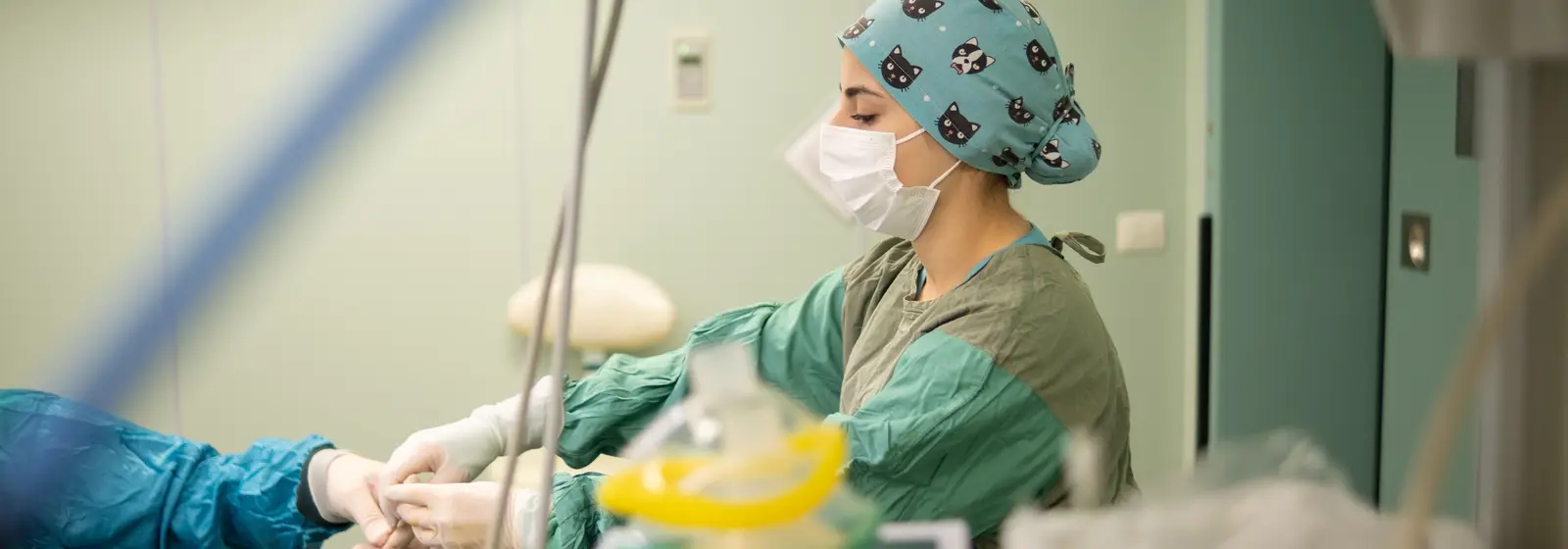
Becoming a CRNA requires nursing education, critical care experience, graduate study, and national certification. Each program sets its own admissions requirements, so review prerequisites and deadlines directly with the schools you are considering.
A baccalaureate or graduate degree in nursing or other appropriate major.
An unencumbered license as a registered professional nurse and/or APRN in the United States or its territories.
A minimum of one year full-time work experience, or its part-time equivalent, as a registered nurse in a critical care setting.
Graduation from a doctoral nurse anesthesiology educational program accredited by the Council on Accreditation of Nurse Anesthesia Educational Programs (COA).
Passing the National Certification Examination to earn the CRNA credential.
Education and career guidance is informed by the American Association of Nurse Anesthesiology (AANA). Confirm program-specific requirements with each university.
Preparing for practice
Graduate education & certification
Nurse anesthesiology programs range from 36 to 51 months, depending on university requirements. Programs combine academic study with clinical experiences that prepare graduates to provide anesthesia care in a variety of settings.
Entry-to-practice nurse anesthesiology education is at the doctoral level. After graduating from an accredited program, candidates must pass the National Certification Examination to become CRNAs.
As you compare schools, ask about required critical care experience, prerequisite courses, clinical placements, application timelines, and the degree awarded.
Our profession
More than 150 years of care
Nurse anesthetists have cared for patients in the United States for more than 150 years. Nurses provided anesthesia on the battlefields of the American Civil War and became the predominant anesthesia providers for wounded soldiers on the front lines during World War I.
The first organized nurse anesthesiology education program began in 1909. The Certified Registered Nurse Anesthetist credential was established in 1956, and nurse anesthetists were among the first specialty nurses to require continuing education.
Today, CRNAs serve patients in civilian and military healthcare settings, continuing a tradition of skilled care, professional responsibility, and service.

Questions about the profession