
About CRNAs
Who provides
your anesthesia
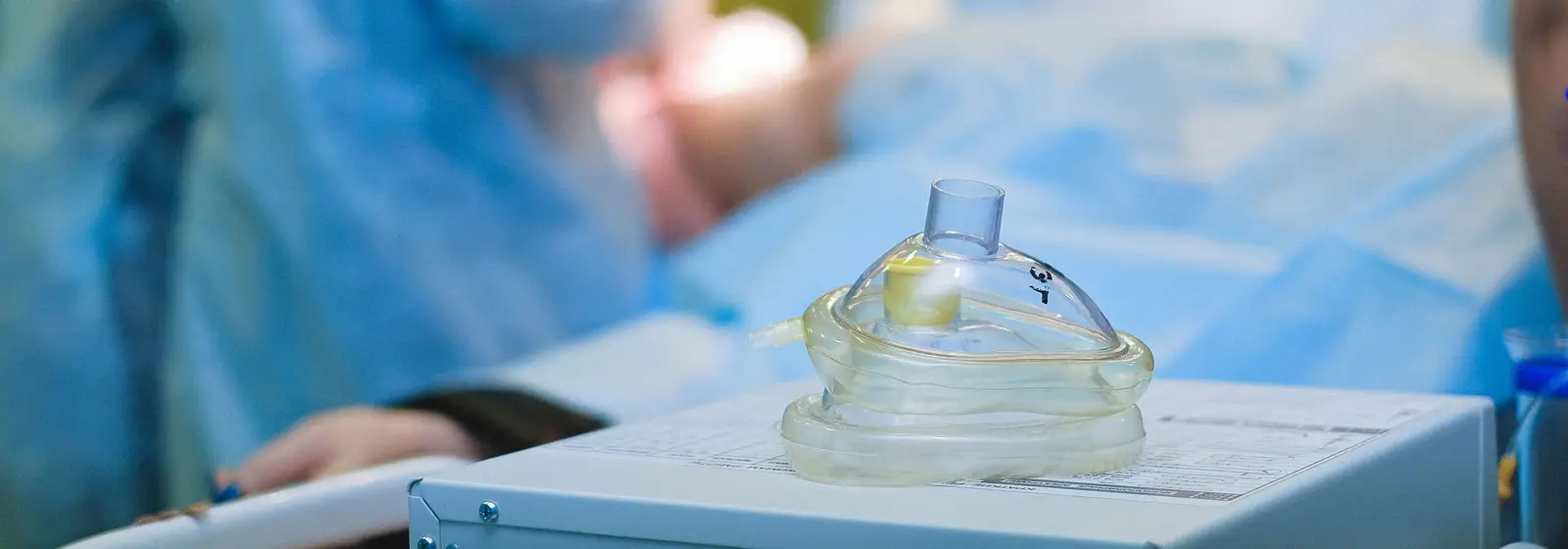
Where CRNAs work
Care settings across Kansas
From major medical centers to rural hospitals, CRNAs provide anesthesia for surgery, childbirth, emergency treatment, and outpatient procedures. Their expertise helps Kansans receive safe, timely care close to home.
- Hospital surgical suites and labor & delivery units
- Critical access and rural hospitals
- Ambulatory surgery centers
- Dental, podiatry, ophthalmology, and pain management offices
- Emergency and trauma settings
CRNAs: Pioneers of American Anesthesia
A Legacy of Firsts
Nurse anesthetists have been providing anesthesia in the United States for more than 150 years. Before anesthesiology existed as a medical specialty, nurses were giving anesthetics, publishing outcomes data, building the first formal training programs, and making the operations that defined modern surgery possible.
1861–1865
Civil War
Nurses gave anesthetics to wounded soldiers during the Civil War. Catherine S. Lawrence is among the first American nurses recorded doing so.[1]
1899
The first published nurse anesthetist
Alice Magaw published "Observations in Anesthesia," the first article by a nurse anesthetist. She documented more than 14,000 anesthetics without an anesthesia-related death, a safety record at a time when anesthesia deaths were common.[3][4]
1909
The first formal anesthesia education program
Agnes McGee opened the first formal nurse anesthesia education program in the United States at St. Vincent's Hospital in Portland, Oregon.[15]
1931
First national association of nurse anesthetists
Agatha Hodgins founded the National Association of Nurse Anesthetists, today the American Association of Nurse Anesthesiology (AANA).[2]
2003
Kansas opts out
Iowa became the first state to opt out of the federal physician supervision requirement in 2001. Kansas opted out in 2003.[2][17]
2022
Doctoral preparation
All students entering an accredited program must be enrolled in a doctoral program.[18]
Explore the full history
Pioneers and patient safety
The earliest nurse anesthetists
1877
The first nurse to specialize in anesthesia
Sister Mary Bernard, a Catholic nursing sister at St. Vincent's Hospital in Erie, Pennsylvania, became the first nurse to specialize in anesthesia.[2]
1889
Mayo Clinic's first anesthetist
Edith Graham became the first nurse anesthetist at St. Mary's Hospital in Rochester, Minnesota, the hospital that grew into the Mayo Clinic.[3]
Setting the standard for safety
1893
Alice Magaw, "Mother of Anesthesia"
Alice Magaw became the anesthetist for Drs. William and Charles Mayo. Dr. Charles Mayo gave her the title "Mother of Anesthesia" for her mastery of open-drop ether.[2]
1899
The first published nurse anesthetist
Magaw published "Observations in Anesthesia," the first article by a nurse anesthetist, and went on to publish additional papers on her technique. She documented more than 14,000 anesthetics without an anesthesia-related death, a safety record at a time when anesthesia deaths were common.[3][4]
1904–1914
Refining and teaching the technique
Florence Henderson, trained by Magaw, became Mayo's ether specialist. She refined open-drop ether technique and published her work in the American Journal of Nursing (1909) and The Saint Paul Medical Journal (1914).[3][5]
Clinical innovation
New anesthetic techniques
1908
Nitrous oxide-oxygen anesthesia
Agatha Hodgins became surgeon George Crile's personal anesthetist at Lakeside Hospital in Cleveland and perfected the administration of nitrous oxide-oxygen anesthesia.[6]
1911
Influence on physicians
Her work at Lakeside prompted further interest in the technique among physicians, including Walter Boothby's 1911 work on nitrous oxide-oxygen anesthesia.[7]
1915
Anesthesia in wartime
Hodgins served at the American Ambulance Hospital in Paris during World War I, where the Lakeside team showed the advantages of their anesthetic technique for patients in shock or injured by gas. Nurse anesthetists have served in every American conflict since.[6]
1920s–1930s
Endotracheal anesthesia for lung surgery
Helen Lamb, chief anesthetist at Barnes Hospital in St. Louis, was one of the first nurse anesthetists in the United States to use endotracheal anesthesia and pioneered the endotracheal technique in lung surgery.[8][9]
1933
The world's first successful pneumonectomy
Helen Lamb gave the anesthetic for Dr. Evarts Graham's first successful one-stage removal of a lung for cancer, a landmark in thoracic surgery.[8][9]
1930s
Equipment designed by a nurse anesthetist
Lamb wrote to the Foregger company describing the anesthesia machine she needed. Foregger built it and offered to name it the "Lamb Model." She declined and asked that it be called the "Barnes Model."[10]
Pioneers of pediatric and cardiac anesthesia
1930s–1960s
Betty Lank, Boston Children's Hospital
Before pediatric anesthesia was a specialty, children were anesthetized with one-size-fits-all equipment. Chief nurse anesthetist Betty Lank designed child-sized masks and ventilation bags and became the first person in the U.S. to use cyclopropane with children.[11]
1938
Equipment for the first congenital heart surgery
She had a hospital engineer build small blood pressure cuffs and masks for pediatric patients before any were commercially available, and she used them while providing anesthesia for Dr. Robert Gross, who founded congenital heart surgery with the first ligation of a patent ductus arteriosus in 1938. The infant blood pressure cuff later became known as the "Smith cuff," after the physician chief who adopted it.[12]
1940s
Olive Berger and the "blue baby" operations
Olive Berger, chief nurse anesthetist at Johns Hopkins, gave anesthesia for the famous "blue baby" operations performed by Alfred Blalock, Helen Taussig, and Vivien Thomas, and had taken over anesthesia for these operations by 1946.[13][14]
1946–1952
Logbooks and recognition
Her detailed logbooks of the first operations for cyanotic congenital heart disease survive in the Hopkins archives. She was left out of the 1946 physician report on anesthesia for these cases. In 1952 she was made an instructor in anesthesia in the Johns Hopkins School of Medicine.[14][13]
Education and professional leadership
Building anesthesia education
1909
The first formal anesthesia education program in the United States
Agnes McGee opened the first formal nurse anesthesia education program at St. Vincent's Hospital in Portland, Oregon. By 1920, almost 20 hospitals offered graduate programs in nurse anesthesia, while only one postgraduate anesthesia course existed for physicians.[15]
1927
Physician departments follow
The first academic anesthesiology department for physicians was founded in 1927.[16]
1911–1915
The Lakeside School of Anesthesia
Agatha Hodgins began teaching anesthesia to nurses and doctors at Lakeside Hospital in 1911 and formally established the Lakeside Hospital School of Anesthesia in 1915.[2]
1931–1939
The first national curriculum
Helen Lamb chaired the AANA Education Committee from 1931 to 1939 and established the curriculum and minimum standards for schools of nurse anesthesia.[9]
1971
Advancing degrees
First bachelor's degree program in anesthesia.[17]
1978
Advancing degrees
First Master of Science degree in nurse anesthesia.[17]
1998
Advancing degrees
Master's degree required for all graduates of accredited programs.[17]
2022
Advancing degrees
All students entering an accredited program must be enrolled in a doctoral program.[18]
Building a profession
1931
First national association of nurse anesthetists
Agatha Hodgins founded the National Association of Nurse Anesthetists, today the American Association of Nurse Anesthesiology (AANA).[2]
1934
Practice affirmed by the courts
In Chalmers-Francis v. Nelson, the California Supreme Court confirmed the legality of nurse anesthesia practice.[2]
1942
The backbone of American anesthesia
There were still 17 nurse anesthetists for every one anesthesiologist in the United States.[15]
1945
National certification
The AANA gave the first national qualifying (certification) exam for nurse anesthetists.[2]
1955
Accreditation
The U.S. Department of Health, Education, and Welfare recognized the AANA as the accrediting agency for nurse anesthesia schools.[2]
1956
The CRNA credential is adopted
The CRNA credential is adopted.[2]
1963
Military leadership
COL Mildred Irene Clark, CRNA, became the first nurse anesthetist to serve as Chief of the Army Nurse Corps.[2]
1977
Mandatory continuing education
AANA members approved mandatory continuing education for CRNAs.[2]
1986
Direct Medicare reimbursement
Congress made nurse anesthesia the first nursing specialty, and the first non-physician group, to receive direct reimbursement under Medicare Part B.[2]
The modern era
2001–2003
Removing outdated supervision requirements
Iowa became the first state to opt out of the federal physician supervision requirement in 2001. Kansas opted out in 2003.[2][17]
2010
Evidence of safety
A study in Health Affairs found no harm when nurse anesthetists work without physician supervision, and its authors recommended that Medicare repeal the supervision requirement.[2]
Today
The legacy continues
CRNAs continue this legacy in operating rooms, labor and delivery suites, pain clinics, military hospitals, and the rural hospitals where they are often the only anesthesia providers.
Sources & further reading
Sources
- [1]Wikipedia, "Certified registered nurse anesthetist."https://en.wikipedia.org/wiki/Certified_registered_nurse_anesthetist (opens in a new tab)
- [2]American Association of Nurse Anesthesiology, "History of AANA."https://www.aana.com/about-us/history/ (opens in a new tab)
- [3]International Museum of Surgical Science, "Nurse Anesthetists at the Mayo Clinic"; and Mayo Clinic Library Guides, "Anesthesiology" (historical unit).https://imss.org/2024/08/nurse-anesthetists-at-the-mayo-clinic/ (opens in a new tab)https://libraryguides.mayo.edu/historicalunit/anesthesiology (opens in a new tab)
- [4]Eyler D, Danke H. "Mayo Clinic Arizona CRNA Recruitment: A Look Forward and Back." AANA.https://www.aana.com/motion-crna-career-platform/mayo-clinic-arizona-crna-recruitment-a-look-forward-and-back (opens in a new tab)
- [5]Working Nurse, "130 Years of Anesthesia Nursing."https://www.workingnurse.com/?p=1802 (opens in a new tab)
- [6]Case Western Reserve University, Encyclopedia of Cleveland History, "Hodgins, Agatha C."; and Case Western, "The Lakeside Unit."https://case.edu/ech/articles/h/hodgins-agatha-c (opens in a new tab)https://artsci.case.edu/lakesideunit/?p=339 (opens in a new tab)
- [7]Wood Library-Museum of Anesthesiology, catalog record: Boothby WM, "Nitrous oxide-oxygen anesthesia, with a description of a new apparatus," 1911.https://www.woodlibrarymuseum.org/?p=2720 (opens in a new tab)
- [8]Washington University Becker Medical Library, "Helen Lamb (1899-1979)."https://beckerexhibits.wustl.edu/mowihsp/bios/lamb.htm (opens in a new tab)
- [9]AANA, "Helen Lamb Outstanding Educator Award."https://aana.com/membership/recognition/aana-awards/helen-lamb-outstanding-educator-award (opens in a new tab)
- [10]Washington University Becker Medical Library, Anesthesiology Resources guide.https://beckerguides.wustl.edu/anesthesiology (opens in a new tab)
- [11]Boston Children's Hospital, "Women in Medicine Month: Celebrating women who paved the way."https://answers.childrenshospital.org/celebrating-women-in-medicine/ (opens in a new tab)
- [12]Harvard Gazette, "Robert Smith" (Faculty of Medicine memorial minute), September 2010.https://news.harvard.edu/gazette/story/2010/09/robert-smith/ (opens in a new tab)
- [13]Johns Hopkins Sheridan Libraries, "The Blue Baby Operation: Anesthesia" (exhibit).https://exhibits.library.jhu.edu/exhibits/show/the-blue-baby-operation/blue-baby-anesthesia (opens in a new tab)
- [14]Johns Hopkins Chesney Archives, "Olive Louise Berger Collection."https://medicalarchives.jhmi.edu/collection/olive-louise-berger-collection/ (opens in a new tab)
- [15]Washington University Becker Medical Library, "A Brief Note on Nurse Anesthetists."https://beckerexhibits.wustl.edu/mowihsp/health/nurseanesth.htm (opens in a new tab)
- [16]University of Wisconsin Department of Anesthesiology, Residency Program Director's message.https://anesthesia.wisc.edu/education-training/residencies/message-from-the-residency-program-director (opens in a new tab)
- [17]Newman University, "History of Nurse Anesthesia" (Doctor of Nurse Anesthesia Practice student links).https://newmanu.edu/academics/doctor-nurse-anesthesia/current-student-links-dnap (opens in a new tab)
- [18]LSU Health New Orleans School of Nursing, "Position Statement Series: Certified Registered Nurse Anesthetist."https://nursing.lsuhsc.edu/Docs/PositionStatementSeriesCRNA.pdf (opens in a new tab)
Further reading
- Bankert M. Watchful Care: A History of America's Nurse Anesthetists. New York: Continuum; 1989.
- Warden P. Watchful Care: A History of America's Nurse Anesthetists, Volume II. AANA.
- Thatcher VS. History of Anesthesia, With Emphasis on the Nurse Specialist. 1953.
- AANA Journal, "Imagining in Time" history column
Still have a question?