

For Patients & Families
Know who is
caring for you
Understanding your care
Who are CRNAs?
Certified Registered Nurse Anesthetists (CRNAs) are highly trained advanced practice nurses who specialize in providing anesthesia care. They care for patients undergoing surgery, childbirth, and outpatient procedures.
With more than 150 years of history in the United States, CRNAs have long been essential in delivering anesthesia care. They bring expertise, attention to detail, and a commitment to patient safety to their work.
Whether you are preparing for surgery, childbirth, or an outpatient treatment, your anesthesia provider can explain your options and answer your questions. Knowing what to expect can help you feel more prepared.
Across Kansas
Where CRNAs care for patients
CRNAs provide anesthesia in a range of healthcare settings across Kansas. In critical access and rural hospitals, they often serve as the sole anesthesia providers.
This helps patients receive routine and lifesaving care close to home. Your own facility can explain the anesthesia services and providers available for your procedure.
- Hospital surgical suites and labor & delivery units
- Critical access and rural hospitals
- Ambulatory surgery centers
- Dental, podiatry, ophthalmology, and pain management offices
- Emergency and trauma settings

What to expect
Your anesthesia in Kansas
In Kansas, anesthesia may be provided by a CRNA, an anesthesiologist, or a team that includes both. Your facility can tell you who will care for you.
Your CRNA’s primary role is to keep you safe, comfortable, and supported from start to finish. They work with the other professionals involved in your procedure and help you understand what to expect.
For questions about an upcoming procedure or who will provide your anesthesia, contact your facility directly and ask to speak with your anesthesia provider.
If a CRNA is your anesthesia provider, they will:
- Stay with you for the entire duration of your procedure
- Continuously monitor your vital signs
- Adjust your anesthesia for comfort and safety
- Work closely with your surgeon, obstetrician, dentist, or other procedural provider
- Answer your questions and help you understand what to expect
Before your procedure
Questions to bring to your care team
Contact your facility directly and ask to speak with your anesthesia provider. These questions can help you start the conversation and feel prepared for your care.
Who will provide my anesthesia for this procedure?
Can I speak with my anesthesia provider before the day of my procedure?
What should I tell my anesthesia provider about my health history and medications?
Who should I call if I have questions afterward?
Public resources
Read more
- 01
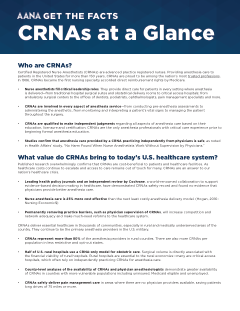 CRNAs at a GlancePDF · 2022 edition(opens in a new tab)
- 02
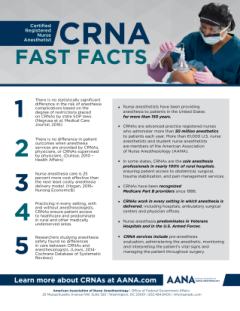 CRNA Fast FactsPDF · 2023 edition(opens in a new tab)
These resources are provided by the American Association of Nurse Anesthesiology (AANA). Figures in these documents reflect their publication year. Check with your facility for information about your own care.

General questions